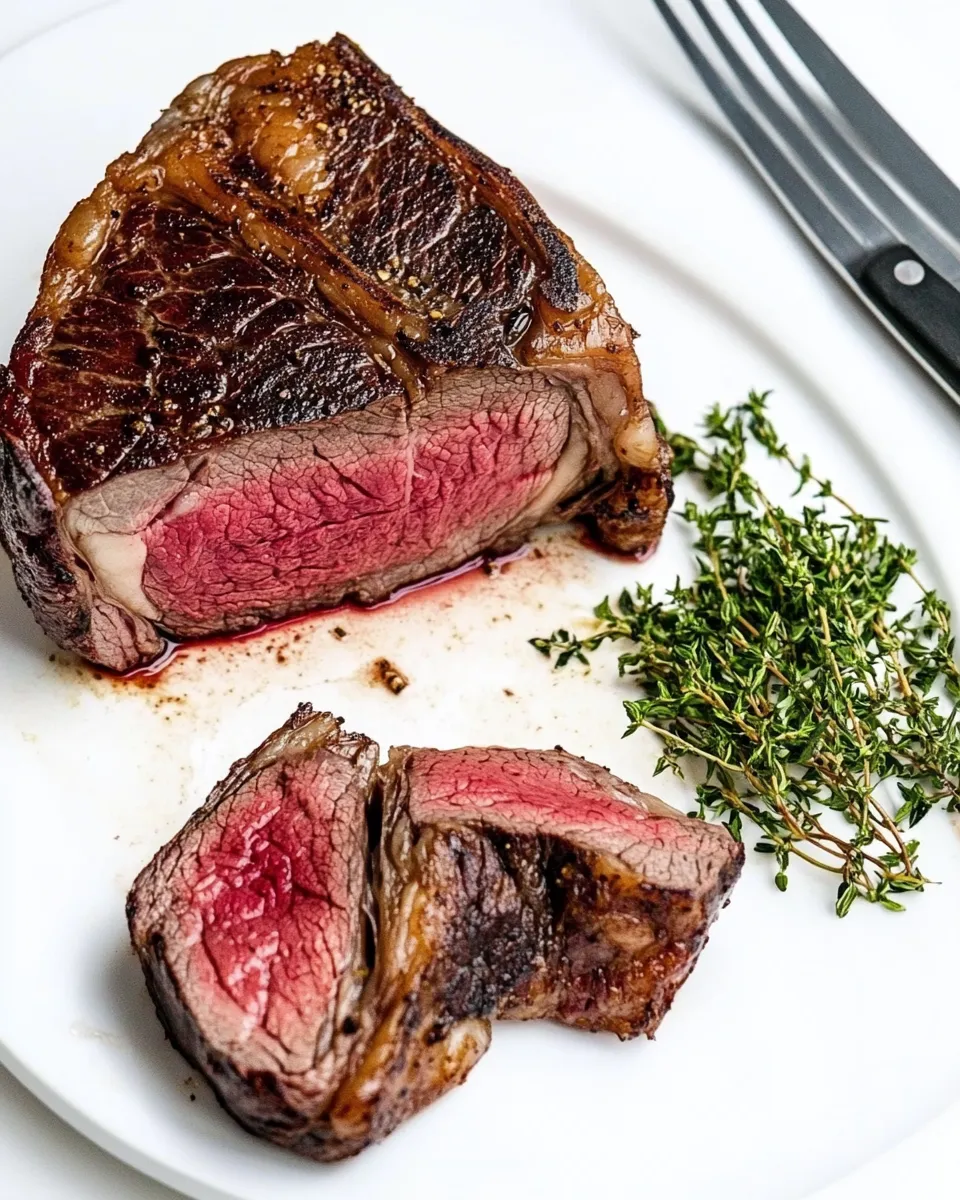
Start by generously seasoning your prime rib steak with salt. This is crucial for drawing out moisture and enhancing the flavor.
Place the seasoned steak in a vacuum-sealable bag along with the thyme sprigs. Spread the steak out flat in the bag to ensure even cooking.
Using your vacuum sealer, remove all the air from the bag, ensuring it is tightly sealed.
Fill a large pot or container with water and attach your sous vide immersion circulator. Set the temperature to your desired doneness: 129°F (54°C) for rare, 135°F (57°C) for medium-rare, or 145°F (63°C) for medium.
Once the water has reached the desired temperature, submerge the vacuum-sealed bag in the water bath. Cook the steak for a minimum of 2 hours, but you can leave it for up to 4 hours for maximum tenderness.
After cooking, remove the steak from the bag and pat it dry with paper towels. Heat a skillet over high heat and add olive oil and butter. Sear the steak for about 1-2 minutes on each side until a golden crust forms.
Let the steak rest for a few minutes before slicing. Slice against the grain and serve your perfectly cooked Sous Vide Prime Rib Steak with your favorite sides.